


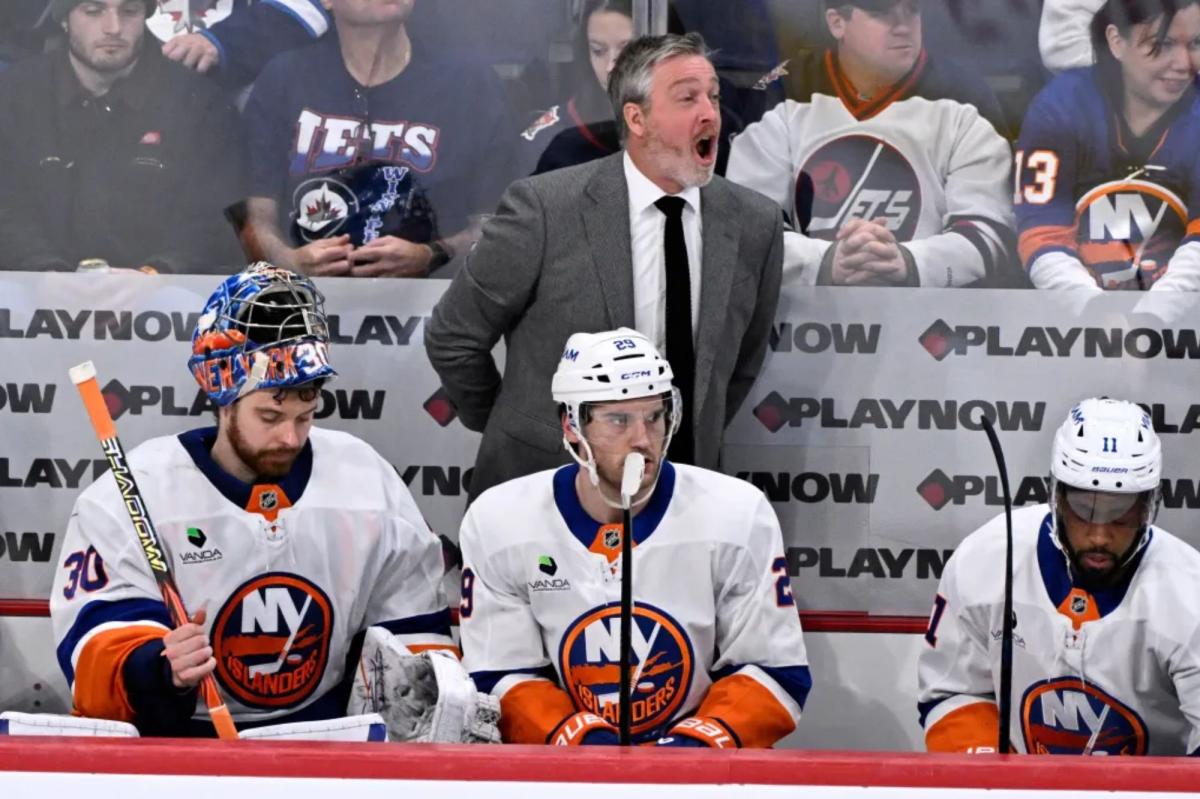
Patrick Roy’s Game Strategy: The Analytics Behind Early Goalie Pulls
CALGARY, Alberta — In the aftermath of the Islanders’ 4-2 setback against the Flames on Saturday, head coach Patrick Roy found himself at the center of an engaging discussion on analytics in hockey. Notably, he is known for his reliance on data in his coaching strategies, making his comments all the more intriguing.
Early Goalie Pull Explained
During the game, with only eight minutes remaining and the Islanders trailing 4-1, Roy made the bold decision to pull his goalie for an extra skater. When questioned if this move was influenced by analytics, Roy dismissed the notion.
“I believe that we’re gonna win the game,” Roy stated, underscoring his confidence in the team’s potential. “I’m not doing this for analytics.”
Roy on Analytics
Roy pointed out specific moments in the game statistics that didn’t reflect reality:
- Expected Goals Against: He mentioned a deflected shot counted as 0.20 and a wraparound listed at 0.17, both of which he argued didn’t actually hit the net.
With passion, Roy articulated his stance:
“So I don’t give a s—t about analytics, to be honest with you.”
The Debate on Analytics
Despite his dismissal, the analytics community often links early goalie pulls with improved chances of winning. The rationale is simple: sacrificing a goalie for an additional skater increases offensive pressure on the opponent, potentially turning the tide in favor of the trailing team.
Why Pull the Goalie Early?
- Increase Offensive Play: More players on the ice enhances the chance of creating successful scoring opportunities.
- Game Theory: The opposing team may settle into a defensive mode, allowing for more strategy.
Rare but Calculated Move
Roy hasn’t frequently opted for early goalie pulls this season, primarily because the Islanders haven’t often found themselves in a substantial deficit. However, this tactic has roots in his coaching history, dating back to his tenure with the Avalanche almost a decade ago.
Islanders’ Performance
In the match against the Flames, the Islanders did manage to score a late goal with the net empty, making it 4-2. However, they couldn’t capitalize further, even with a late power play opportunity.
What’s Next for the Islanders?
As the season progresses, the effectiveness of Roy’s strategies will be put to the test. Fans and analysts alike will be keeping a close eye on his decision-making, questioning whether he’ll lean more into analytics moving forward or stick to a more gut-driven approach.
The Bigger Picture
The ongoing evolution of hockey analytics continues to spark debates among coaches and players. Understanding the implications of stats on game decisions can be pivotal for teams aiming for success. For more insights into hockey analytics, explore resources like Hockey-Graphs or Data-Driven Hockey.
As the Islanders navigate this season, both fans and analysts will be intrigued to see how Roy balances his instincts with analytical insights.
Conclusion
Patrick Roy’s reluctance to base his strategies purely on analytics raises essential questions about the role of data in modern hockey. As teams like the Islanders strive for excellence, the blending of experience and analytics will likely remain at the forefront of coaching discussions. Keep an eye on how this unfolds throughout the remainder of the season, as every game counts in the competitive landscape of the NHL.
