


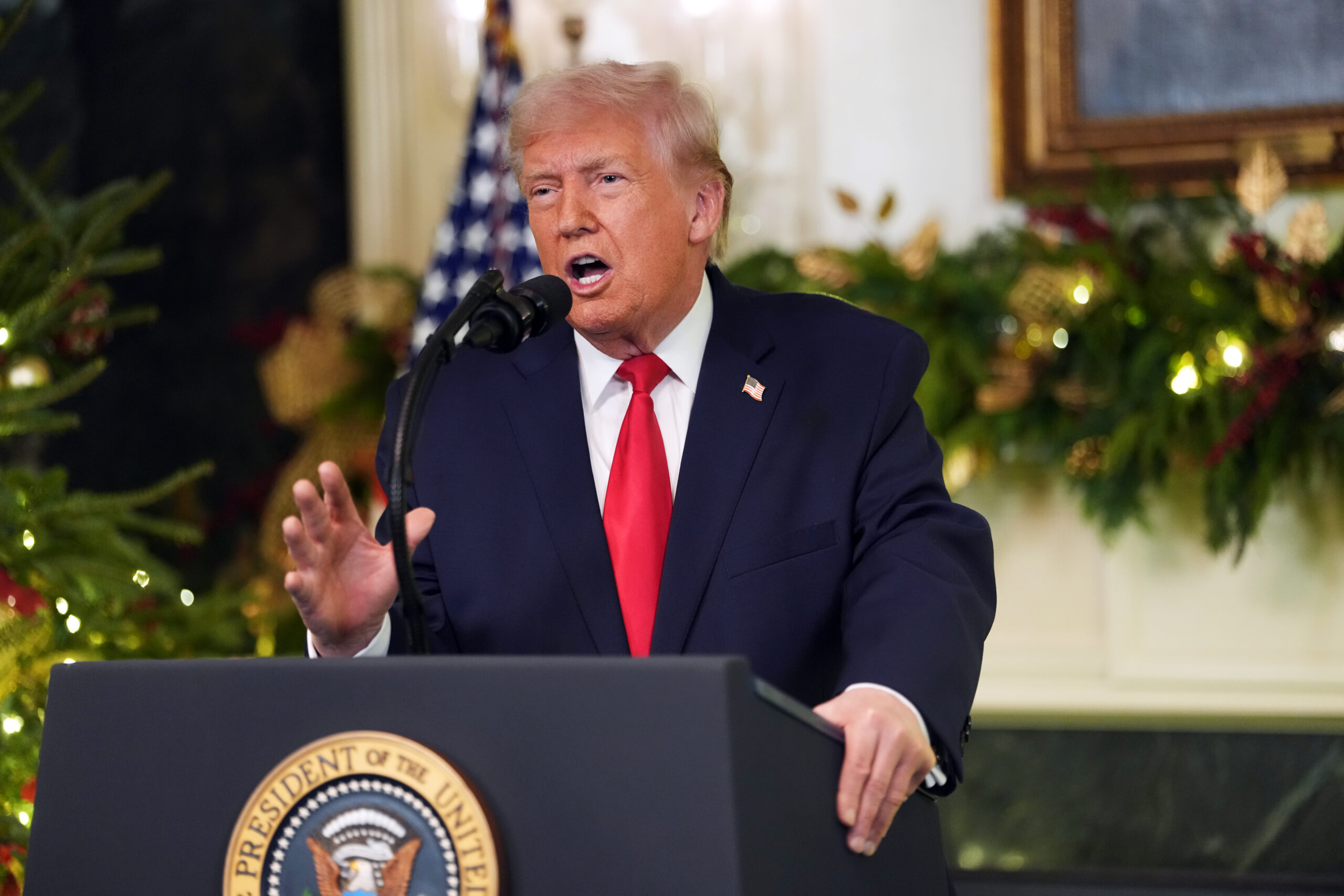
Major Networks Face Backlash Over Trump’s Economic Address
The ongoing discourse surrounding President Trump’s economic claims took a notable turn during his recent primetime address. Major broadcast and cable news networks are under fire for choosing not to display White House-provided charts that illustrated the economic data referenced by Trump.
Background of the Address
On Wednesday night, during his nationally televised speech, Trump aimed to showcase his administration’s economic accomplishments. To bolster his statements, the White House team created visual aids designed to accompany the president’s assertions. However, most major networks opted to refrain from broadcasting these graphics.
Networks’ Responses
Prominent networks, including NBC, CBS, and ABC, declined to use the visuals during the address. CNN also made the decision not to air the graphics. Conversely, Fox News was the exception, displaying some of the slides while clearly labeling them as "White House graphics" to inform viewers of their provenance.
Rationale Behind the Decisions
CNN media reporter Brian Stelter revealed that executives from various networks expressed their hesitation, citing concerns about the sourcing of the graphics. This has led to speculation that the networks aimed to maintain journalistic integrity by not showcasing information they could not independently verify.
"They did not come with clear sourcing information," said one anonymous network executive, highlighting the underlying tension between journalistic standards and the responsibility to inform viewers.
Public Reaction
The decision not to broadcast the graphics triggered significant backlash on social media platforms, particularly X. Users criticized the mainstream media for failing to accurately report economic data.
- Criticism on X:
- "Once again proving that MSM has lost [its] way entirely… Pathetic."
- "God forbid they do some journalism and verify the sources… They never took the Biden Admin’s claims seriously."
Contrasting Viewpoints
Despite the criticism, the refusal to show the graphics appears to have been a decision rooted in skepticism of the content presented during the address. Left-leaning journalists have also scrutinized the information shared by Trump, pointing out discrepancies in his statements.
For instance, Trump claimed that gas prices had plummeted to below $2.50 in many regions. However, the corresponding White House graphic indicated that the national average surpassed $3, evidencing a serious inconsistency between the claim and the data.
Highlighted Facts
Some elements of Trump’s speech were substantiated by factual evidence:
- Egg Prices: Trump claimed prices had decreased by 82% since March. While the New York Times acknowledged that wholesale egg prices had dropped from over $8 to about $1.45, this marks a 44% decline at retail level, not the 82% claimed.
Expert Insights
Kevin Hassett, a White House economic adviser, appeared on MS NOW following the address. When questioned about the president’s tendency to exaggerate economic performance, Hassett suggested the need to review the specifics, emphasizing that the president had invested considerable effort into preparing the slides intended for his speech.
Conclusion
The refusal of prominent news outlets to display the White House graphics during President Trump’s economic address raises crucial questions about media responsibility and the verification of information. As audiences increasingly consume news through digital platforms, the dynamics between information presented by political figures and journalistic standards will likely continue to evolve.
For further information on media ethics and their impact on public discourse, explore this insightful article.
Additional Resources
By closely examining the interactions between political communication and media practices, viewers can better navigate the complexities of modern reporting in an era characterized by partisanship and information overload.
