


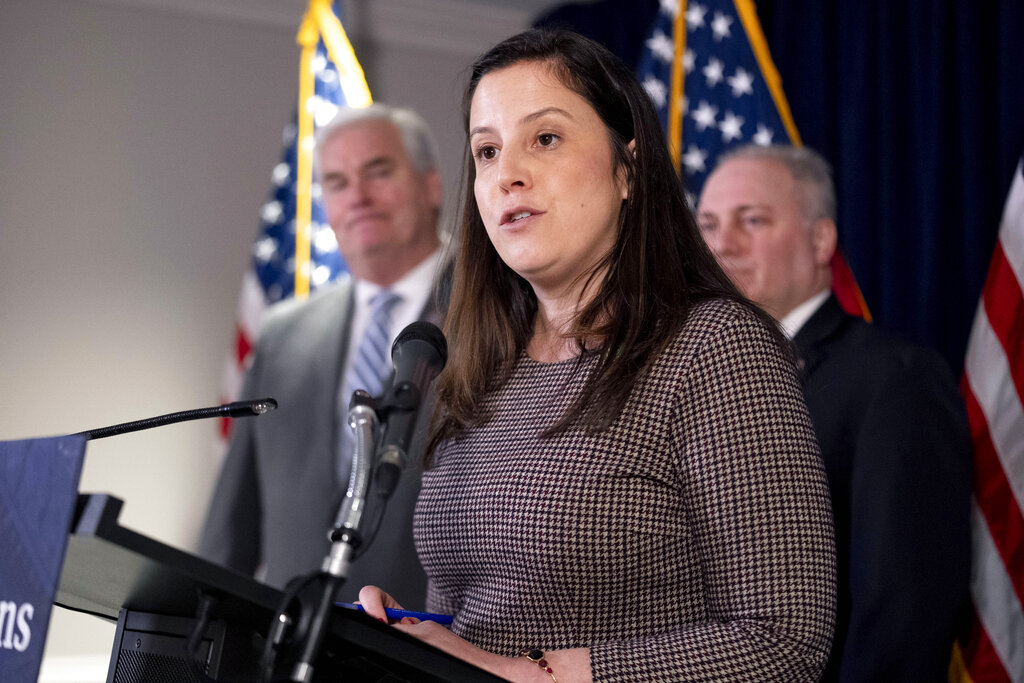
Stefanik and Johnson Resolve Feud Over Counterintelligence Reform
Summary of Events
Congresswoman Elise Stefanik and Speaker Mike Johnson have momentarily set aside their differences, reaching an agreement on a crucial counterintelligence reform. This follows a period of tension stemming from Stefanik’s previous nomination for U.N. ambassador, which was withdrawn due to Johnson’s apprehensions about the House majority.
Tensions Rise
Accusations of Weakness
On Monday, Stefanik publicly criticized Johnson for allegedly being “rolled” by Democrats. Her remarks were fundamentally linked to a proposed revision in congressional authorization, which would inform lawmakers and candidates subject to federal investigations. She stressed that her proposal, included in the Intelligence Authorization Act, aims to enhance accountability and transparency within the intelligence community.
- Key Points of Stefanik’s Reform:
- Provision for lawmakers, candidates, and select staffers to receive notifications during federal investigations.
- Strengthens accountability and transparency to deter misuse of the intelligence community.
Stefanik voiced her frustration, stating, “Unless this provision is added back into the bill to prevent illegal political weaponization of the intelligence community in our elections, I am a HARD NO.”
Johnson’s Initial Response
When questioned about Stefanik’s comments, Johnson claimed ignorance regarding the issue. This prompted a swift backlash from Stefanik, who accused him of dishonesty, asserting, “True to form, the Speaker texted me yesterday claiming he ‘knew nothing about it.’ Yeah right.”
A Shift in Dialogue
Collaborative Efforts
However, the narrative shifted on Wednesday, as Stefanik announced a conversation with both Johnson and President Trump. During this discussion, both leaders assured her of their commitment to integrate her proposal in the Intelligence Authorization Act.
Stefanik celebrated this development, deeming it a significant victory against the "illegal weaponization of the deep state."
Public Critique of Leadership
Despite the newfound collaboration, Stefanik did not shy away from criticizing Johnson. In an interview with the Wall Street Journal, she suggested that he would struggle to retain his position if a vote were held today, arguing, “He certainly wouldn’t have the votes to be speaker if there was a roll-call vote tomorrow.”
She compared Johnson unfavorably to former Speaker Kevin McCarthy, stating, “Whereas Kevin McCarthy was a political animal, Mike Johnson is a political novice and, boy, does it show.”
Johnson’s Challenges
Leadership Struggles
Johnson openly acknowledged the difficulties of his role, describing it as a continuous state of crisis management. During a recent podcast with conservative commentator Katie Miller, he expressed that the demands of his position have prevented him from taking a vacation in two years.
“We have this joke that I’m not really a speaker of the House,” Johnson joked, highlighting the nature of his responsibilities.
Conclusion
The agreement between Stefanik and Johnson marks a temporary resolution in their ongoing disputes, spotlighting the unique challenges faced by party leaders. With the pressures of party unity and legislative priorities looming, the future dynamics between these Republican figures will be crucial as they navigate both their internal factions and external political pressures.
Related Links
This evolving situation exemplifies the complexities of congressional leadership, as leaders must work collaboratively while addressing the various factions within their party.
