


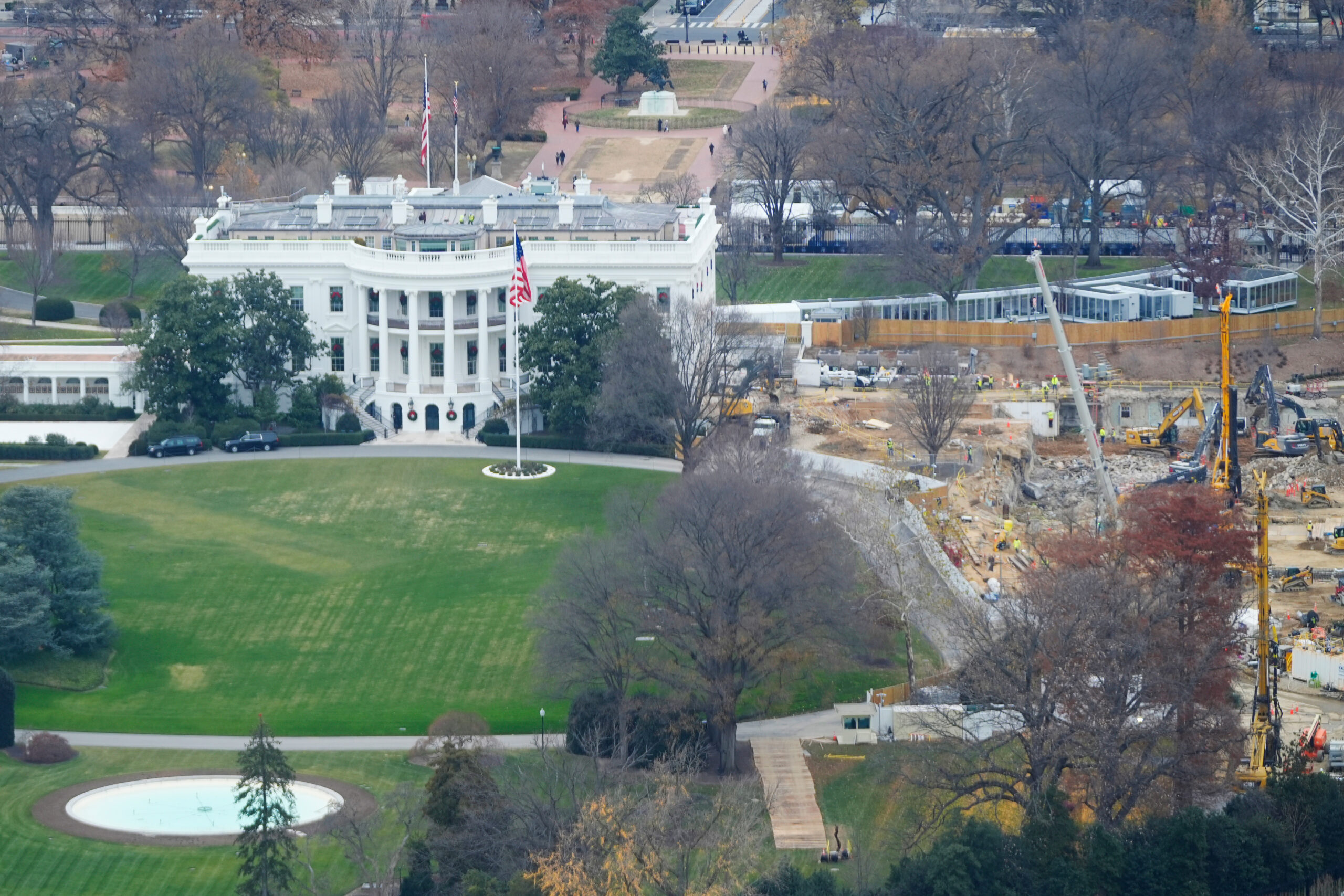
Controversy Surrounds White House Ballroom Construction: National Trust for Historic Preservation Sues Trump Administration
A recent court filing by the Trump administration has stirred considerable debate, claiming that delays in constructing the new White House ballroom could jeopardize Secret Service security operations. This assertion arises in response to ongoing legal battles concerning the significant new wing under construction at the White House.
Lawsuit Challenges Legality of Construction
The National Trust for Historic Preservation has formally sued President Trump and various federal agencies, aiming to halt construction until a thorough review process is completed as mandated by law. The lawsuit, filed in the United States District Court for the District of Columbia, alleges that the project is being executed unlawfully.
Key Points from the Lawsuit:
- Construction began without necessary plans submitted to the National Capital Planning Commission.
- Required environmental impact studies were reportedly not conducted.
- The lawsuit contends that Congressional approval is essential for the project’s continuation, claiming President Trump is infringing upon the Property Clause of the Constitution, which reserves rights regarding federal property to Congress.
Carol Quillen, CEO of the National Trust, stated, "The White House is arguably the most evocative building in our country and a globally recognized symbol of our powerful American ideals. As the organization charged with protecting places where our history happened, the National Trust was compelled to file this case."
Administration’s Defense: Security and Executive Authority
In a legal rebuttal filed on Monday, the Trump administration contests the lawsuit, asserting that:
- The President has statutory authority to modify his residence, supported by Executive power principles.
- Delays from a court injunction could have national security implications, per the Secret Service.
Security Concerns Highlighted:
- The Secret Service has noted that crucial improvements to the site remain unfinished, which are essential to meet safety and security needs.
- Deputy Director Matthew Quinn has offered to discuss classified security details privately with the presiding judge.
Project Details: A Major New Addition to the White House
The ongoing construction involves demolishing the below-ground section of the former East Wing, which previously housed an emergency bunker for the president. As revealed by the National Park Service, key construction phases include:
- Work on footings and below-grade structural concrete is expected to commence in January, with full construction projected to start by April at the earliest.
- Completion of the new ballroom project is anticipated by 2028, just months before the conclusion of President Trump’s potential second term.
Specifications of the New Ballroom:
- Size: Approximately 90,000 square feet.
- Access: A two-story passageway will link the ballroom to the Executive Mansion.
- Capacity: Designed to accommodate over 1,000 guests, surpassing the 200-person limit of the existing East Room.
- Design: The architectural style will include classical elements, such as columns and pediments, compatible with the Executive Mansion.
Additional Features:
- The ballroom will offer multiple staging options and scenic views from various directions.
- Enhanced mechanical, electrical, and plumbing systems will include custom chandeliers and high-quality interior finishes, making it a state-of-the-art facility.
Conclusion: The Future of White House Events
As the controversy unfolds, the Trump administration emphasizes the necessity of the ballroom in facilitating larger events without relying on temporary tent structures. This vital addition is expected to enhance the functionality of the White House for future gatherings, aligning with the administration’s vision of a modernized landmark that marries history and contemporary utility.
For further information, visit the National Trust for Historic Preservation here.
