


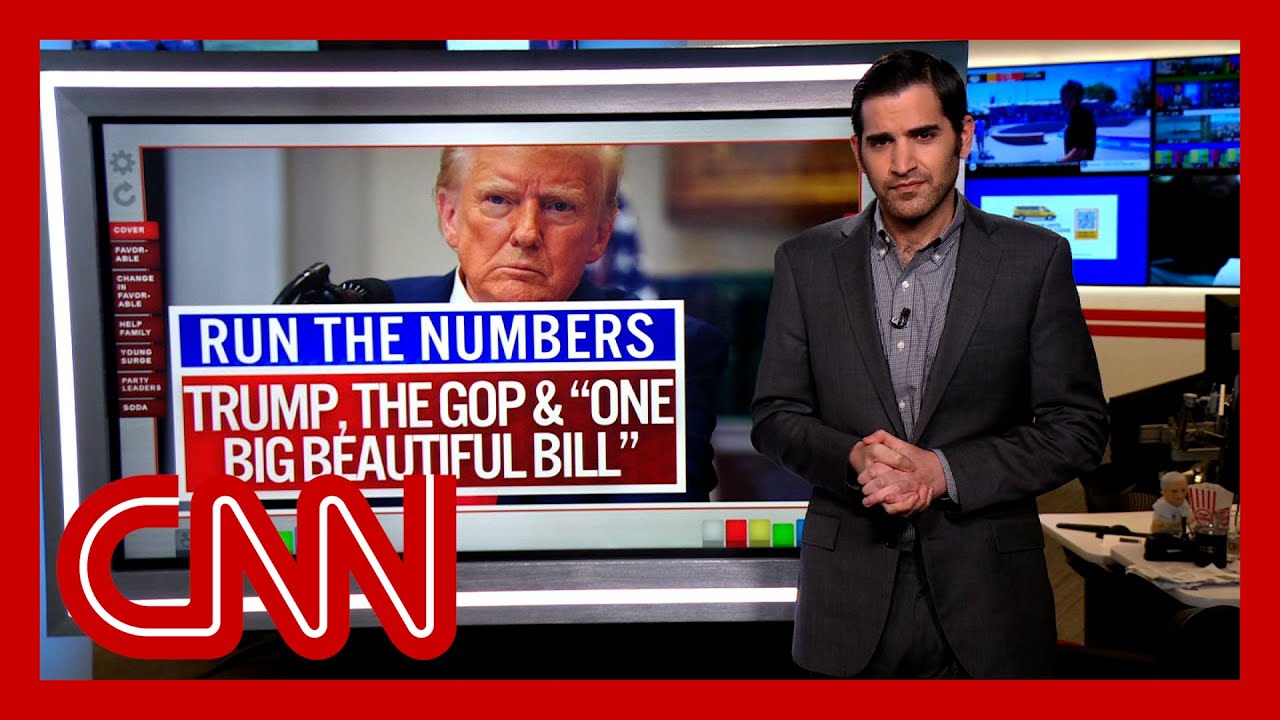
Video at the bottom!
In a recent CNN segment, chief data analyst Harry Enten highlighted the negative public perception surrounding President Donald Trump’s proposed domestic policy bill, often referred to as the “big, beautiful Bill.” Enten cited a series of polls showing strikingly low net favorable ratings ranging from -19 to -29 points, indicating widespread disapproval among Americans. He noted that even as conversations about the bill evolve and details emerge, public sentiment has remained consistently negative, with many regarding it as detrimental to their families.
Enten pointed out that only 23% of respondents believed the bill would help their families, while a larger 49% felt it would have harmful effects. This sentiment starkly contrasts with the perception of Trump’s earlier policies, which had garnered more favorable views.
As the Senate moved forward with discussions, concerns were raised about the bill’s potential $3 trillion impact on the deficit, which several Republican senators openly criticized, fearing it would undermine their fiscal conservative ideals. Meanwhile, Democrats unified against the bill, characterizing it as a detrimental measure that favors wealthy individuals while sacrificing crucial assistance programs for low-income Americans.
Political analysts noted that the internal conflicts within the Republican Party, particularly among fiscal conservatives versus those aligned with Trump, complicate the narrative further. Prominent senators, like Thom Tillis, expressed their opposition, suggesting that those who defy Trump risk facing severe political repercussions.
Overall, the discussion underscored a growing disconnect between the bill’s intended benefits and the tangible concerns of voters—a disconnect that may have lasting implications as lawmakers navigate the political landscape ahead of the 2026 midterms. As the situation unfolds, it remains to be seen how Republicans will manage the controversial portions of the bill and communicate its impacts to their constituents.
