


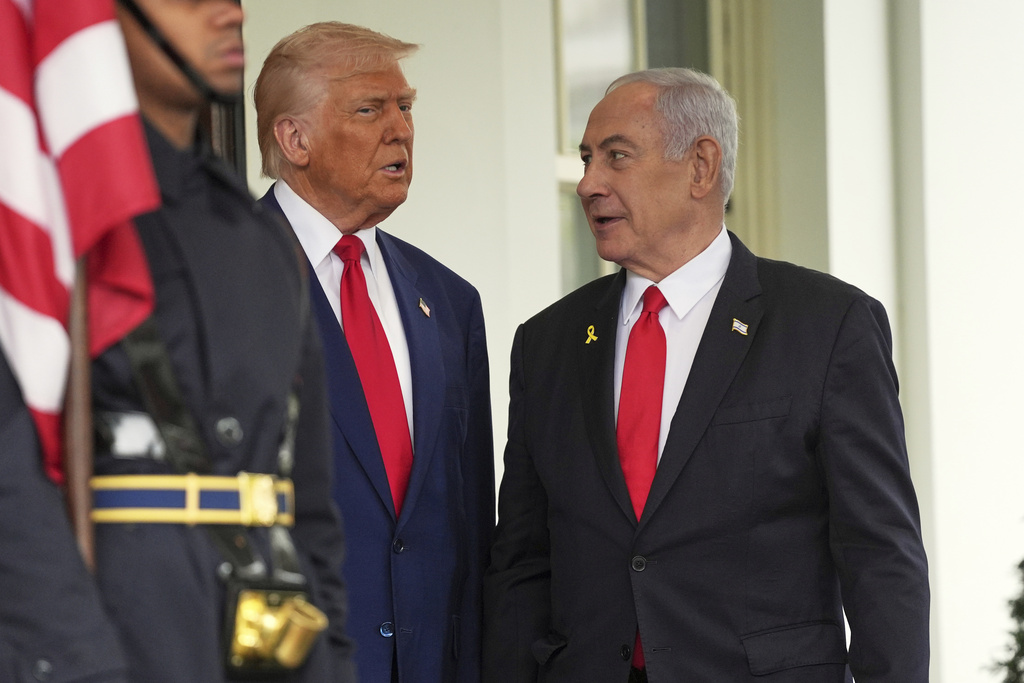
Trump and Netanyahu Set to Discuss Cease-Fire and Middle East Relations
Focus Keyword: Trump Netanyahu Meeting
President Donald Trump and Israeli Prime Minister Benjamin Netanyahu are scheduled to meet at the White House on Monday to address critical issues, particularly a highly anticipated cease-fire between Israel and Hamas. The Trump administration is optimistic about potential expansions of the Abraham Accords, which facilitated normalization of relations between Israel and several Arab states.
Netanyahu’s Visit Overview
Netanyahu’s arrival in the U.S. marks his third visit to Washington since Trump resumed his presidency in January. During their initial meeting, Trump proposed that the United States might assume control of Gaza as part of a future peace settlement — an idea that has yet to materialize.
- Context: Netanyahu has praised Trump’s recent decisions, especially the bombing of Iranian nuclear sites, calling it a "bold decision" that could "change history."
Despite the perceived success of the Iran mission, Trump has faced challenges securing a cease-fire agreement between Israel and Hamas, which he initially hoped to finalize within days.
Hostage Situation Focus
Before departing Israel, Netanyahu emphasized his commitment to securing the return of 20 hostages currently held. He has expressed willingness to negotiate the return of 30 deceased hostages in exchange for a cease-fire with Hamas.
Cease-Fire Terms
Recently, Trump announced that Israel has consented to a proposed two-month cease-fire if Hamas accepts. He made this announcement via Truth Social, stating:
“Israel has agreed to the necessary conditions to finalize the 60 Day CEASEFIRE, during which time we will work with all parties to end the War.”
Hopes for Diplomatic Progress
In addition to addressing the cease-fire, the meeting presents an opportunity for potential normalization of diplomatic relations between Israel and Arab nations.
Thomas Barrack, the U.S. ambassador to Turkey, recently revealed that the United States is mediating discussions between Syria and Israel aimed at resolving long-standing conflicts. He expressed hope that Syria’s new leader, President al-Shara, would be open to joining the Abraham Accords.
“He cannot be seen by his own people to be forced or coerced into the Abraham Accords,” Barrack stated. “So he has to work slowly.”
Political Challenges
Alongside foreign policy discussions, Trump has also sought to leverage his political influence in relation to Netanyahu’s ongoing corruption trial. Drawing parallels to his own legal challenges, Trump criticized the timing of Netanyahu’s trial as a potential distraction from critical negotiations regarding Hamas and Iran.
- Quote from Trump: “How is it possible that the Prime Minister of Israel can be forced to sit in a Courtroom all day long, over NOTHING?”
Trump has hinted that ongoing legal issues could affect U.S. aid to Israel, stating:
“We are not going to stand for this.”
Conclusion: A Pivotal Meeting Ahead
The upcoming meeting between Trump and Netanyahu holds significant implications not only for Israel and Hamas but also for broader Middle East relations. With a focus on humanitarian outcomes, such as the return of hostages, and diplomatic normalization efforts, the two leaders aim to navigate a complex geopolitical landscape.
For further information on the Abraham Accords and U.S.-Middle East relations, visit the U.S. Department of State.
